
Essen: Injury-free and full of enthusiasm

Why? Because Eating Is Culture.
Eating is not only one of our basic human needs, but also an essential part of our culture. What we eat and how we eat it varies greatly from one culture to another.
In many cultures, eating with your hands is perfectly normal. What we may consider “messy” or “impolite” in our part of the world is often associated with completely different and much more positive values elsewhere.
Our hands are natural tools, equipped with sensors that allow us to assess the quality of food simply by touching it. In this sense, wanting to eat with our hands is both natural and useful – which is why babies and toddlers instinctively choose this method when they first begin exploring food.
As babies develop their senses, the experience of grasping warm and cold, hard and soft, solid and liquid objects becomes incredibly important. These sensory experiences are enjoyable and essential for developing a healthy relationship with food.
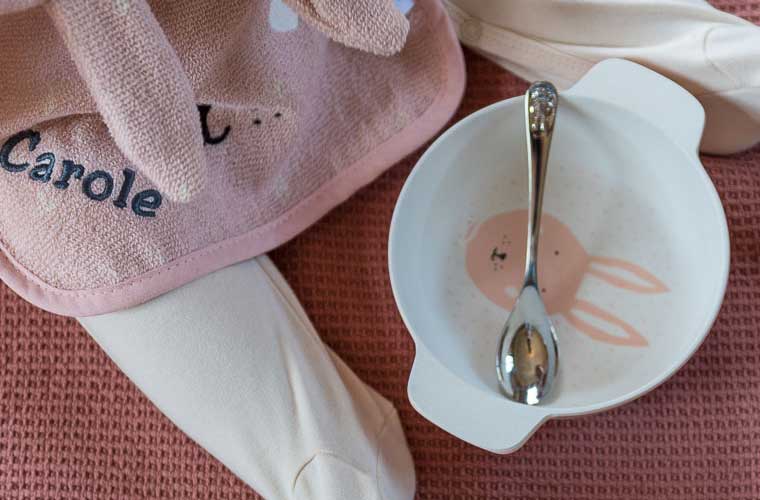
Whether with hands, chopsticks or cutlery: proper eating skills must be learned. It is important that nothing is forced and that the joy and pleasure of eating remain intact. Pressure and unrealistic expectations can negatively affect eating habits. Finding the right balance is key, and enjoyment should always come first.
When? Finding the Right Time.
First of all, the good (or perhaps bad?) news: there is no single “right” time. Every child develops differently, and motor skills do not emerge at exactly the same pace. Much depends on how children play and practice these skills through everyday experiences.
Of course, babies cannot immediately use cutlery properly. This requires motor skills and coordination that need time and practice to develop.
With What? The Difference Between Nature and Culture.
The most natural form of eating begins with breastfeeding. No baby needs to be taught how to do this – nature takes care of it. Babies also quickly recognise a bottle as a source of nourishment and eagerly suck to receive milk.
Before long, babies discover that eating with their hands is the easiest and most natural method. There is really nothing wrong with this when it comes to pieces of bread or other foods that can be safely brought to the mouth by hand.
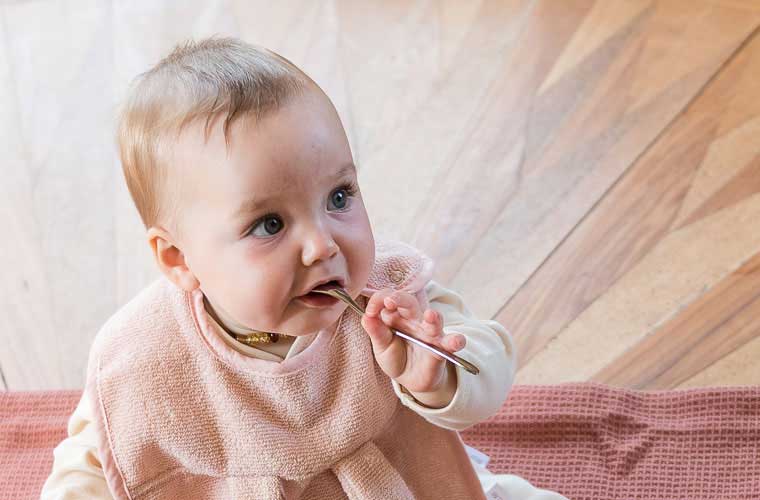
Things become a little more complicated – and considerably messier – when foods are hot, moist or covered in sauce. Pasta is a favourite among children, but once served with sauce, it is definitely not ideal for eating with fingers alone.
This applies to many of the foods commonly prepared in our part of the world. Soup is an obvious example. While the broth could theoretically be drunk, trying to eat the ingredients by hand would likely result in a rather impressive mess.
How? Learning Step by Step.
It is obvious that eating with cutlery cannot come immediately after bottle feeding. Children need time to become familiar with this more complex way of eating. Patience is essential.
At first, your child may hold a fork in one hand while grabbing food directly from the plate with the other – and that is perfectly fine.
Children are excellent imitators. They naturally try to copy the behaviour of adults and older siblings. There is no need to constantly correct them if using cutlery does not work perfectly right away.
Children must learn to master everyday tasks independently. While this may not always sound exciting, succeeding at these challenges contributes enormously to their self-confidence. When a child manages to move pasta from the plate to their mouth with a fork or spoon, they experience a sense of achievement and feel proud of their “grown-up” behaviour.
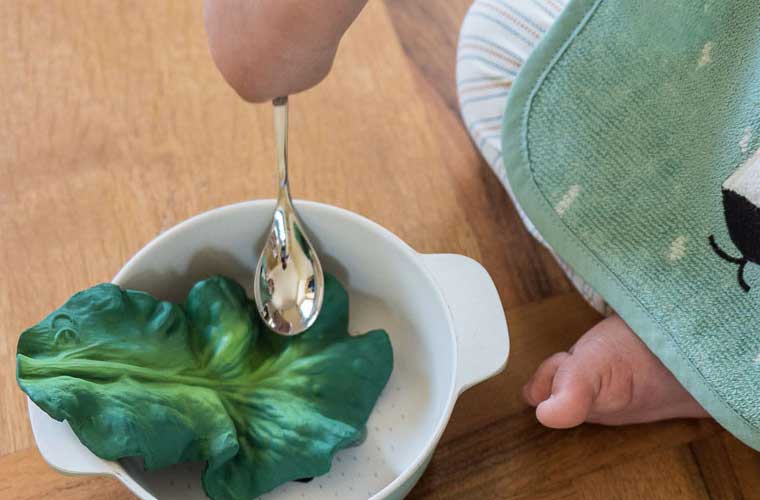
Why? The Child in Public.
A completely permissive approach – allowing everything because clothes can be washed and tables can be cleaned – may support a child’s personal development to some extent. However, it can also lead to considerable uncertainty in situations such as kindergarten, restaurants or visits with friends.
Children sense this uncertainty and may feel excluded or uncomfortable, which is not particularly beneficial for their personal growth.
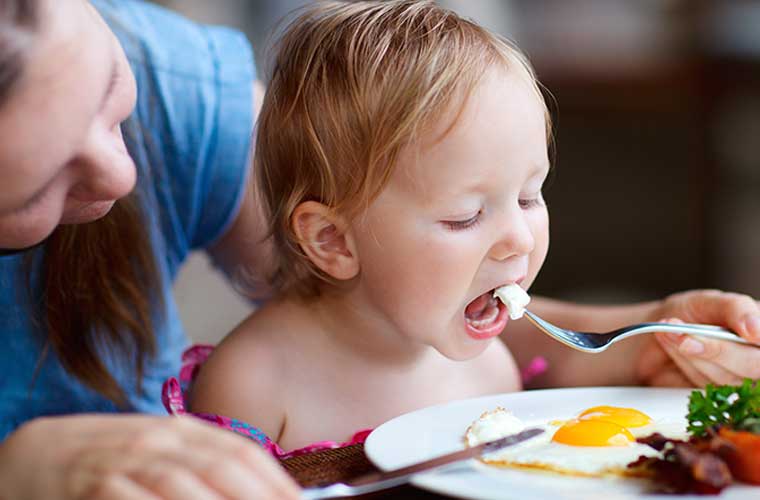
How? A Few Helpful Tips.
- Children’s cutlery is designed differently from adult cutlery. Investing in a proper children's set is definitely worthwhile. It is easier for little hands to use and often becomes a treasured keepsake.
- A deep plate helps children scoop food more easily. The raised edges make it simpler to push food onto a fork or spoon.
- Plastic plates can be helpful, as they reduce concerns about breakages and accidents.
- Stay relaxed. There will be plenty of spills and messes at the beginning, but keeping calm is important. Mealtimes should always remain a positive experience.
- Children copy everything they see. This can sometimes be challenging—especially when older siblings set a questionable example—but it is also one of the most effective ways they learn. The key is to lead by example.
- Praise is far more effective than criticism. It may sound obvious, but it cannot be repeated often enough. Children learn faster through positive feedback, while negative reactions to unwanted behaviour are often quickly forgotten.